

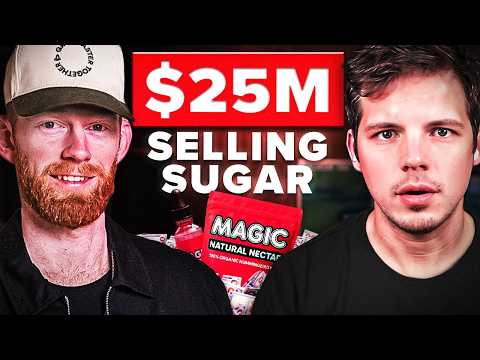
How it works
Bulk sugar is portioned into pouches and heat-sealed at home, with AI-made packaging art and product images. Sales come from paid Facebook and Instagram ads using a testing campaign and a winning campaign. Multipacks lift order value to cover shipping, and an in-cart ebook add-on raises it further. The seller can later hand production to a contract packer and sell on Amazon too.
Why it is overlooked
It seems absurd to sell sugar, but a premixed competitor shows strong repeat demand and a huge margin on a commodity.
How to start
- Check Amazon listings and review counts to confirm the demand for competing nectar products.
- Design a pouch and product photos with an AI image tool and set up a Shopify store.
- Buy bulk sugar and a small heat sealer and pack pouches yourself.
- Run a testing ad campaign with several creatives, then move winners into a scaling campaign.
- Sell only multipacks and keep each pouch under the weight bracket of cheaper postal rates.
Numbers from the video
- Start-up cost
- 50 lb sugar bags cost about 40 dollars, a heat sealer about 20 dollars, and the first order was 250 bags. A sugar-dispensing machine was priced around 1,200 dollars.
- Revenue
- About 5,000 dollars in sales in roughly two and a half weeks. Pouches sell at 18 dollars each for about 3 dollars of cost, an 80 percent gross margin as reported, with a return on ad spend around 1.5. Shipping averaged about 12 dollars per order.
- Who is doing it
- The host built the store himself as an experiment and says he aims for around a million dollars a year across a four-month season.
Figures are as reported in the video. They are not verified and are not advice.